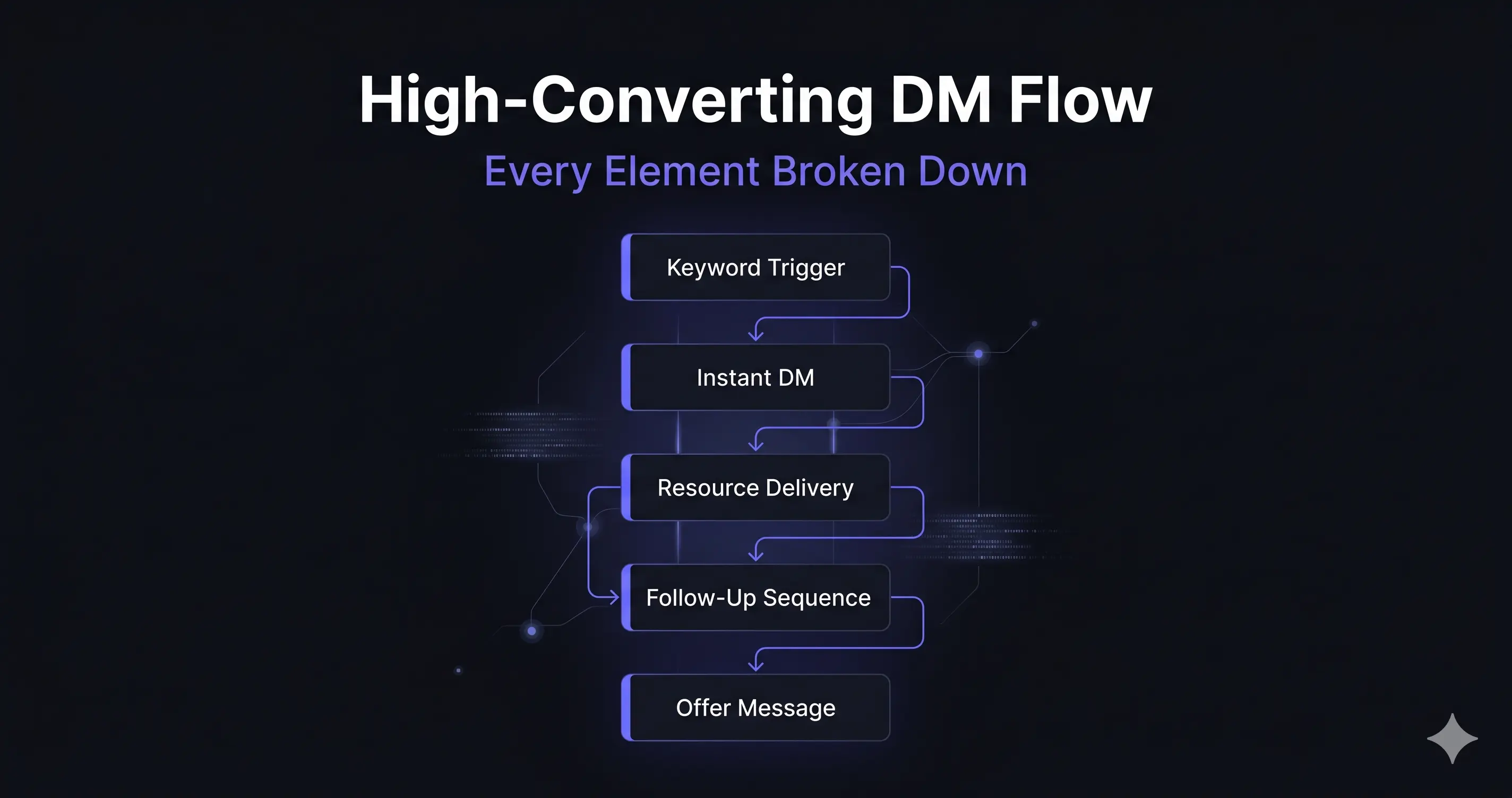
Why Most Comment-to-DM Flows Underperform
Setting up a comment-to-DM trigger in Flonix takes minutes. Building a flow that actually converts those triggered conversations into leads, bookings, and sales takes an understanding of every element that drives (or kills) conversion at each stage. Most flows fail not because of the automation setup, but because of weak spots in the copy, structure, or timing of the sequence.
This is a breakdown of every element of a high-converting comment-to-DM flow — and the specific choices that separate flows that convert at 5% from flows that convert at 20%+.
Element 1: The Keyword
Your keyword must be specific enough to signal intent but short enough to be easy to type. One-word keywords (GUIDE, FREE, APPLY, YES, TEMPLATE) consistently outperform multi-word keywords because they reduce the commenter's effort. Test your keyword in the caption against the actual content of the post — the keyword should feel like the natural next step after consuming the content, not an arbitrary code to unlock something.
High-converting keyword patterns: Action words that match what the resource does (DOWNLOAD, SEND, SHARE) or desire words that match what the viewer wants (FREE, YES, HELP, GUIDE).
Element 2: The Instant DM (The First Message)
The instant DM is your highest-leverage message in the entire sequence. It arrives at peak interest — the moment after the viewer engaged with your content and took a deliberate action to signal they want more. Everything about this message should be optimised for that context:
- Speed: It must arrive within 1–3 seconds of the comment. Any longer and the context starts to fade.
- Personalisation: Use their first name if available. "Hey [First Name]!" outperforms "Hey!" in open-rate and reply rate.
- Clarity: Deliver exactly what you promised in the caption. Include the resource link, file, or access in the first message — don't make them ask again for what they commented to receive.
- Conversation opener: End with one simple question to start a reply chain. "What's your biggest challenge with [topic] right now?" This question does two things: it starts a conversation that signals to Instagram the DM relationship is genuine, and it gives you data about your audience's needs.
Element 3: The Resource
The lead magnet must deliver immediate, specific value. Vague resources ("Instagram tips") underperform specific resources ("7-step comment-to-DM setup checklist"). The more precisely the resource addresses the exact problem the content was about, the more the receiver feels the DM experience is personalised to their specific situation.
Element 4: The Follow-Up Sequence
Days 1–7 determine whether a lead becomes a customer. Structure the sequence to build trust before presenting any offer:
- Day 1: Check-in on the resource. Ask if they found value. This message should feel like a genuine follow-up from someone who cares, not a bot checking a box.
- Day 3: A teaching message — one specific insight, quick win, or data point related to the resource topic. Deliver value before asking for anything.
- Day 5: Soft offer presentation. Frame it as a natural next step from the resource, not a sales message. "If you want to go deeper on this, I built [product] that takes you from [point A] to [point B] in [timeframe]."
- Day 7: Objection handling. Address the most common reason your ideal buyer hesitates (price, time, readiness) and present the offer once more.
Element 5: The Offer Message
The offer message should reference the specific resource they downloaded and the problem it was designed to solve. "Since you downloaded the [lead magnet], you're clearly working on [specific goal]. I built [course/coaching/product] specifically for people at exactly your stage — here's what's inside." Specificity at the offer stage converts dramatically better than a generic "check out my course" message.
Frequently Asked Questions
How many follow-up messages is too many?
5–7 messages over 7–10 days is the effective range for most offers. Beyond that, response rates drop significantly and unsubscribe risk rises. If a lead hasn't responded after 7 messages, add them to a low-frequency long-term sequence (monthly check-in) rather than continuing to push.
Should I use emojis in DM sequences?
Match your brand voice. If you use emojis in your captions and stories, use them in DMs. If your brand is more formal or minimalist, skip them. Consistency with your content voice is more important than any specific style choice.